It’s time I finally get around to this overdue write-up on my backyard yeast culture.
Late last Summer, I tried my hand at bioprospecting- the practice of capturing wild indigenous yeast and bacteria. This can include simply introducing samples or swabs into growth medium (starter wort), or even isolating individual cells on agar plates to grow a pure culture.
On September 25, 2018, I ventured down this rabbit hole when I caught a slow-flying Yellow Jacket and placed it in a 50ml sterile tube with 25ml of lightly-hopped, low gravity (1.010 SG) starter wort. In the true sense of the word “prospecting,” I had zero expectation of success, but to my surprise and delight, this first attempt would go on to yield live viable yeast! And even better, this yeast can produce beer that tastes great!
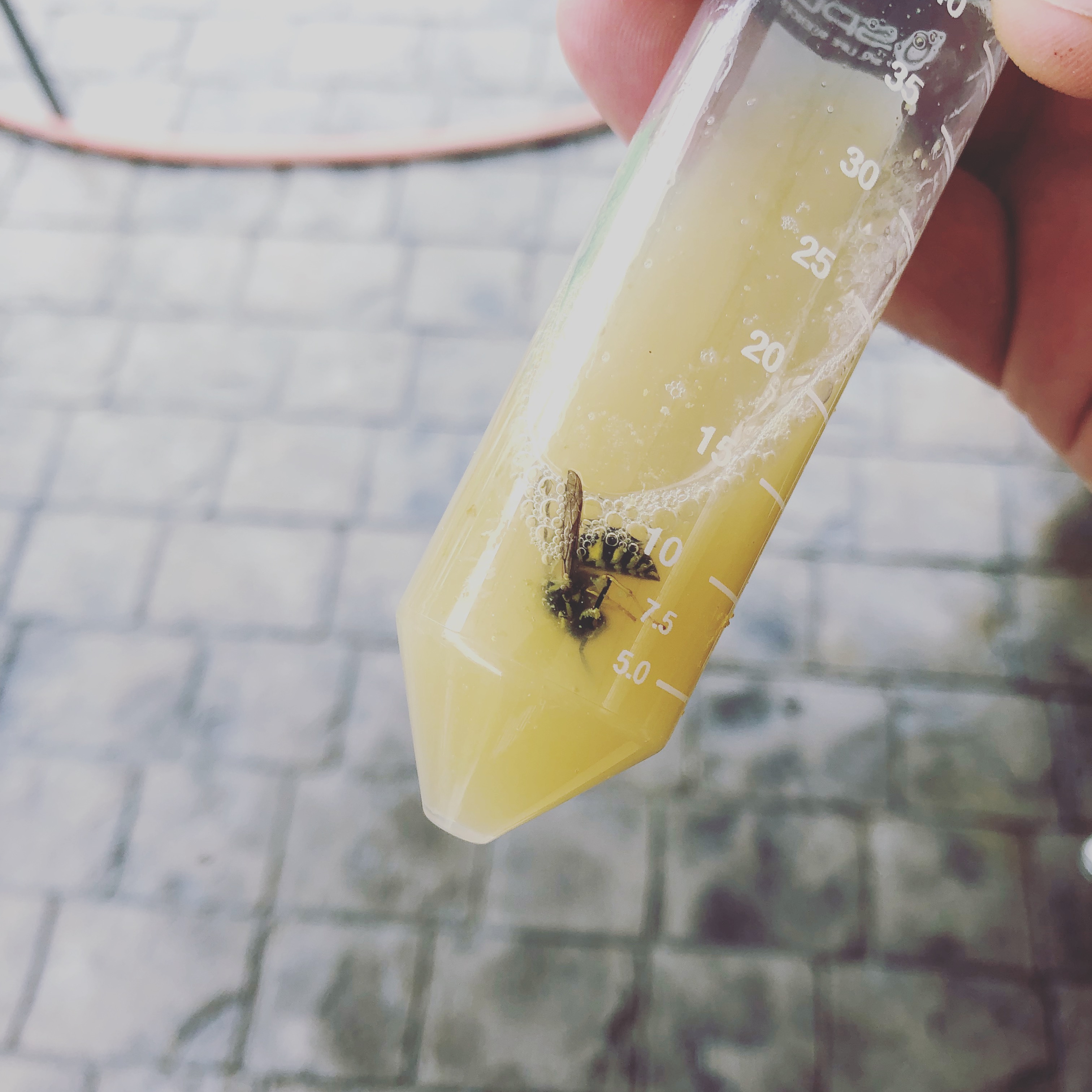
For context, most bioprospectors gather multiple samples (5, 10, even 20) on a single session and place each in its own sterile growth environment (tube of wort, agar plate) and hope that one or two of those samples will yield something viable. My approach was much like throwing a dart in an empty unlit room while blindfolded. To find something that can ferment beer wort is impressive, much like hitting the dart board in the dark. To have something that can produce beer that tastes good- that’s like hitting the bullseye… in an unlit room… while blindfolded. Purely random chance; no skill involved. I got lucky.
As any good yeast strain or mixed culture is not complete without a snappy name, I decided to call mine ex vespula, which is kinda Latin-ish for “in/from/of the bee.”
The Process:
- September 25: The process started with a single Yellow Jacket in a sterile collection tube. Honey bees contain yeast in their gut; I was hoping that this guy did also. Or maybe on its wings, its legs, or antennae. The bee was one of many who were swarming around and dive-bombing me that afternoon as I was cleaning up from brew day. They were moving fairly slowly, winding down at the end of Summer, so catching one was fairly easy. I simply waited for one to land, cracked open the sterile tube and placed it over the bee. When the bee attempted to fly away, I pulled back the tube and screwed on the cap. Later, I added 25 ml of lightly hopped 1.010 starter wort to the tube. I don’t typically include hops when making a standard yeast starter, but they were a vital part of this process since I was specifically selecting for yeast. The presence of hops (specifically their Alpha Acids) at every step would inhibit the growth of any souring bacteria that might be present.
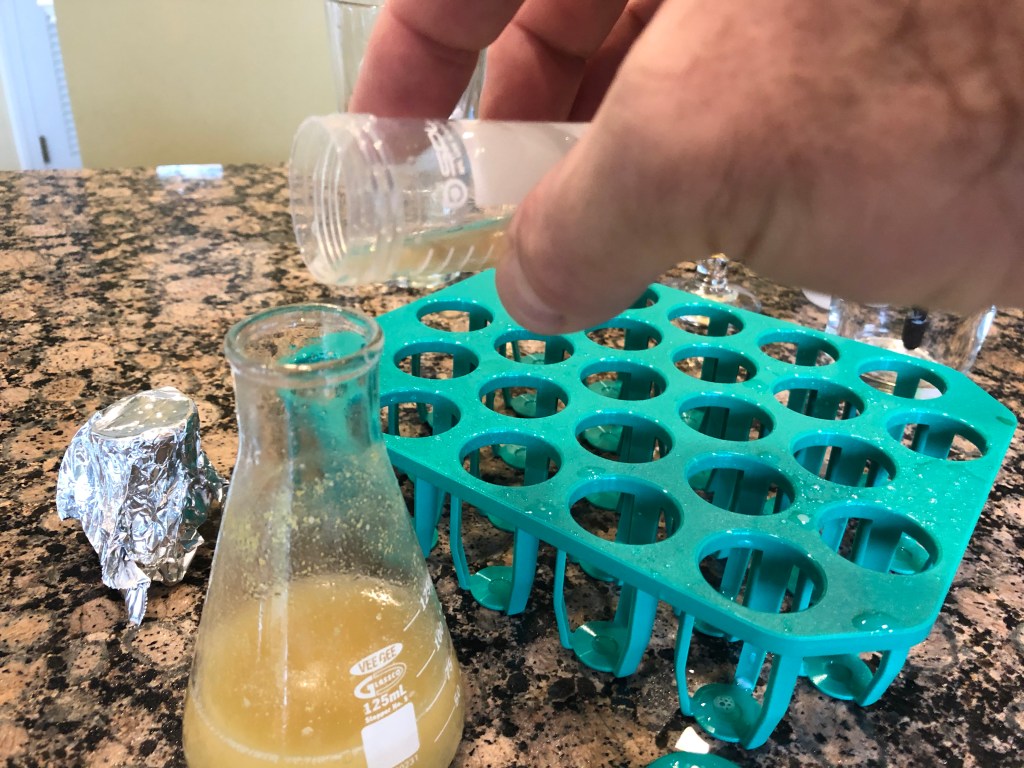
- October 10: I checked on the sample to see how it was doing. A small amount of sediment was apparent in the tip of the vial, and I was hopeful that I had something. I slowly began unscrewing the cap, and a satisfying “tssst” indicated the presence of CO2 pressure, supporting my suspicion that fermentation had occurred! I decanted the sample and poured the small amount of sediment into 75ml of fresh starter wort (again, very low gravity and lightly hopped).
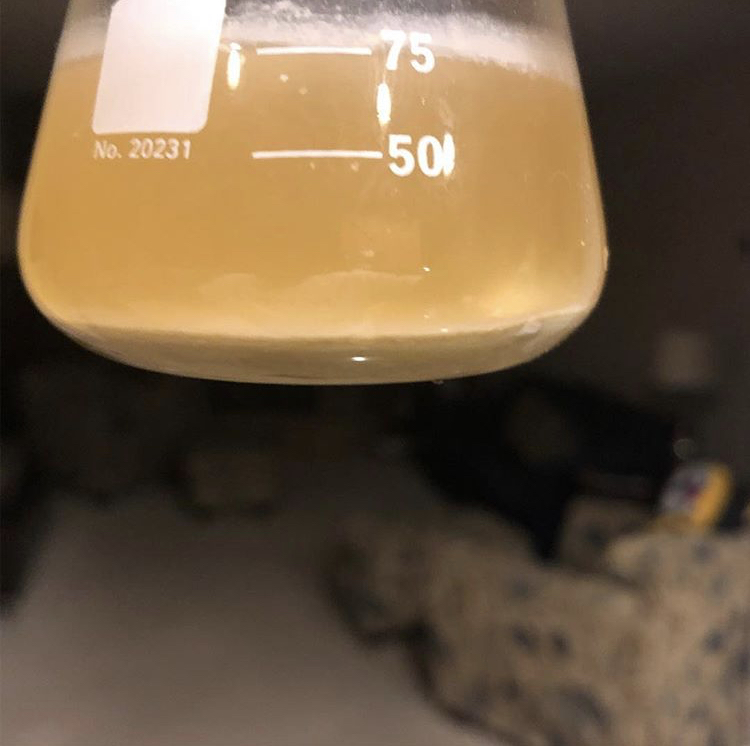
- October 24: A 1/8″ slurry at the bottom of the flask, and what appeared possibly to be a thin pellicle on the surface of the wort were further signs that fermentation was occurring. I stepped this up to a 750ml 1.040 lightly hopped starter and employed the stir plate.
- November 7: One more step to 1500ml, and from a single Yellow Jacket captured six weeks earlier, I had enough yeast to ferment a 5 gallon batch of beer.
The Beers:
So far, I have made three beers fermented with this culture:
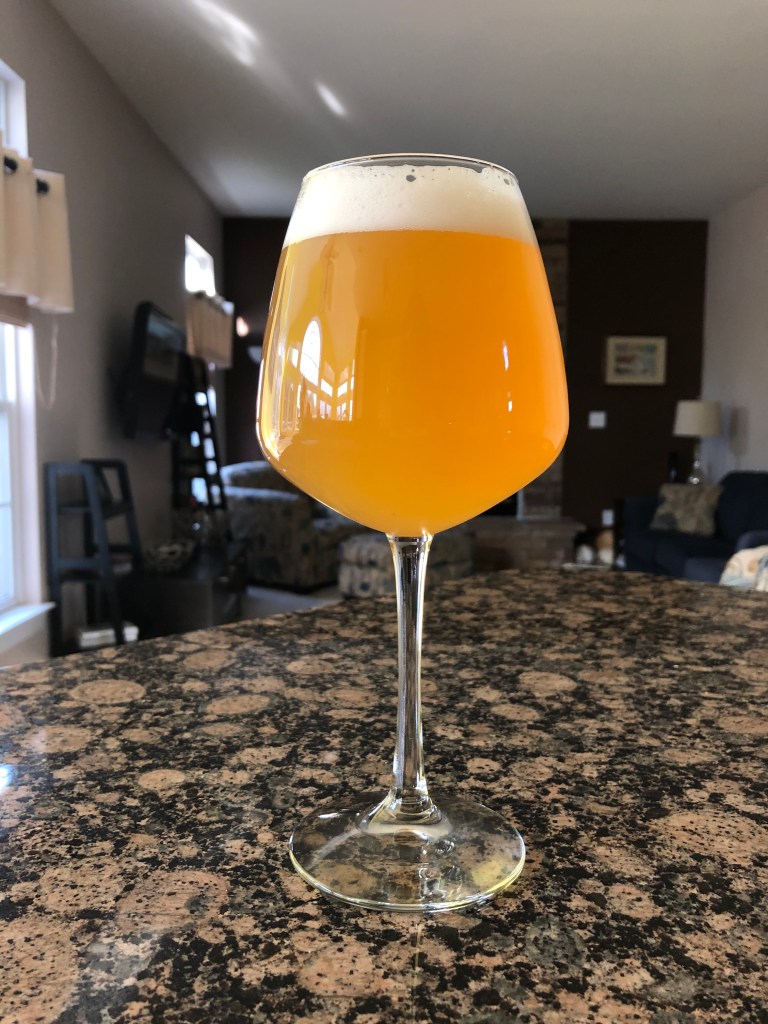
- ex vespula: Batch 1 had to be namesake to the culture. This was a low ABV, gently hopped (about 21 IBU of Saaz from a single 60 minute addition) beer with a grist of 70% pilsner and 30% wheat. For this batch, I wanted something that would not be too challenging for the yeast to ferment, while allowing the yeast character to drive the overall flavor and aroma of the beer. What I had, once finished, was light and effervescent, with notes of tutti fruity, pineapple, and black pepper.
- Ghosts Appear and Fade Away: Batch 2 unfortunately never made it to packaging. I left it in primary far longer than I should have and it picked up some unpleasant oxidized notes. What was intended was a single hopped Pale Ale (around 5% ABV) made with homegrown Centennial, Thomas Fawcett Pearl malt and a touch of Crystal 10.
- Talk without Speaking: Batch 3 was a strong showing for this yeast culture in my opinion. 100% local ingredients: water collected from a local spring, all PA grown malts, hops from another local homebrewer’s garden, and of course ex vespula. This was a 3.5% ABV beer that finished quite dry at 1.003. Pilsner, wheat, and rye made up the grist. The homegrown Cascade lent a pleasant citrusy grassy quality. Although I didn’t have a particular style in mind when I brewed this beer, the finished product reminded me of a classic Saison.
The Isolates:
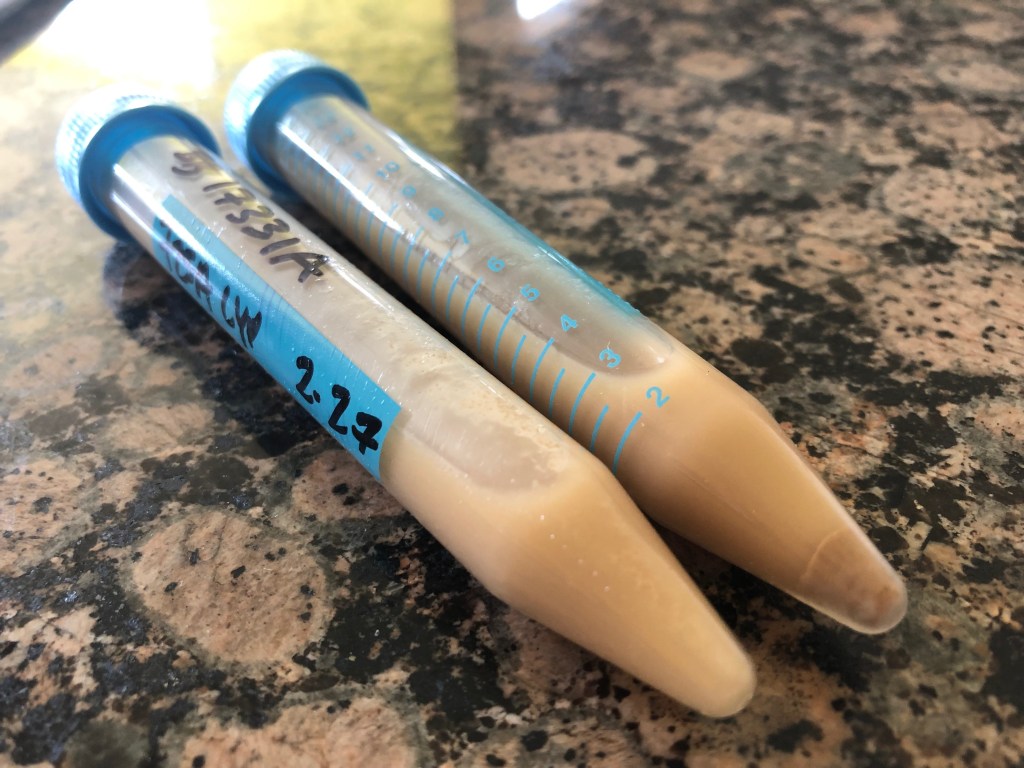
On January 11, 2019, I sent a sample of my culture to Bootleg Biology with the hope that it could be included in their Local Yeast Project. After a period of testing with microscopes and other laboratory stuff, the team there were able to isolate two unique yeast strains from my ex vespula sample. These two strains are now banked at the Bootleg Biology lab and will represent Hanover as part of the Local Yeast Project. I received samples back of these two strains in the mail just last week, and now I’m eager to get them into a beer. I’m very curious to see how each of these strains differs from one another, and whether either appears to be dominant in the original culture.
I will keep the original culture going as long as I can. I plan to incorporate it into my house mixed culture, which will contain ex vespula and a commercial Saison strain, as well as a mixed culture grown up from a bottle of Allagash Belfius and a sourdough culture from Mainiacal Yeast Labs.
The pure isolates will also be fun to work with, although how either or both will fit into my brewing is yet unknown.
 Counterpoint Brewing and Blending