THE SPARK
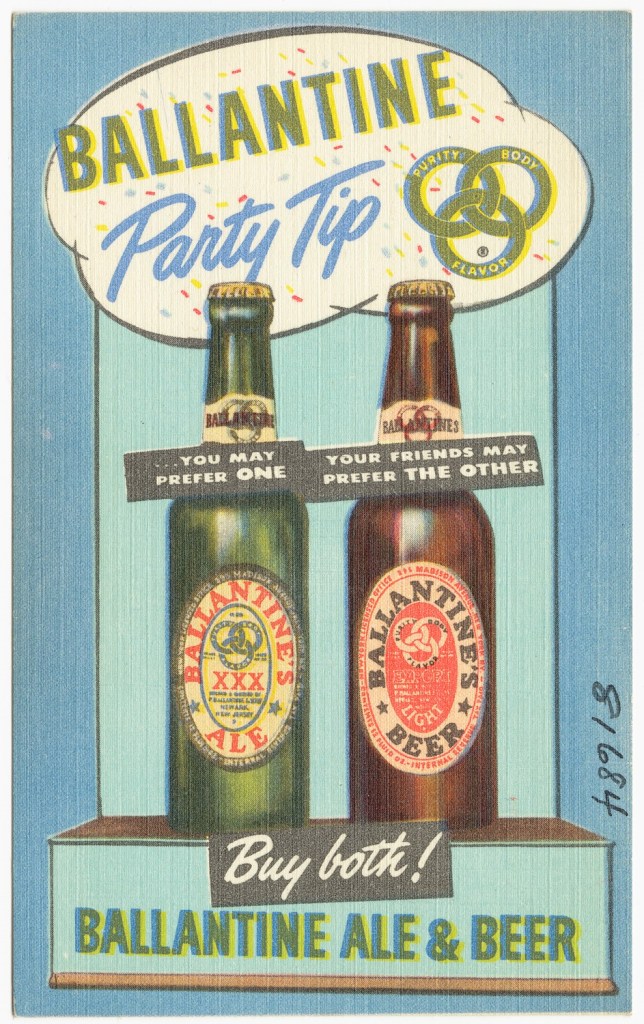
I’ve been a bit obsessed with Ballantine lately. Although this beer has always had a place in the periphery of my consciousness (as far back as I remember- all the way to my childhood) nothing about it ever sparked much interest for me until very recently. Even a few years ago when Pabst Brewing Company (current holder of the brand) issued a re-boot of Ballantine IPA, I never made the effort to get my hands on any. It’s probably not an accurate replica of the original anyway, I told myself while passing it over on the shelf.
Point is, as many directions as my passion and enthusiasm for all things beer has taken me, and as omnipresent as Ballantine has been in the corner of my beer eye, it never meant anything to me more than old mid-Century breweriana- tin tackers, trays, bar mats, napkin caddies, church keys- things that I didn’t want or need, the type of rusty old Americana you see on eBay, or at yard sales or flea markets. This was old man’s beer, even to my father’s generation 30 years ago it was old man’s beer, nestled snugly in that category alongside other old man brands like Schlitz, Hamm’s, Schaefer, and Blatz. It was a defunct brand from a defunct brewery, extinct, a nostalgic footnote in the annals of American beer history. As such, I never gave it much of my attention until recently, when it instantly became a full-blown obsession.
You see, a few weeks ago, I picked up a vial of Old Newark Ale yeast from East Coast Yeast lab. This strain is said to have been propagated by ECY from preserved cultures from the shuttered P. Ballantine and Sons Brewery in Newark, NJ, which ceased operation in 1972. This yeast has been in production at ECY for over a decade, and in spite of being aware of it for almost that long, I’ve never sought out to purchase any. I’m a fan of ECY, and I’ve used several other of their pure strains and mixed cultures, but never this one. I decided to pick it up at this time, simply because I wanted to brew a few British styles this year, and this yeast with its cool back-story and British origins seemed a more interesting choice than any of the more common British strains from any of the bigger labs. Then I told my dad about it, and everything changed. It was a brief and simple exchange of text messages:
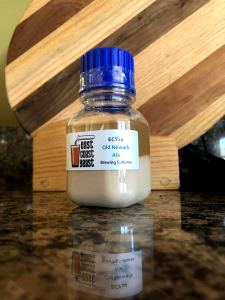
-“I just got my hands on an interesting yeast. The strain is called Old Newark Ale and was propagated from bottles of Ballantine Ale dating back to the 60’s. Looking forward to trying it out.”
-“Save one for me. I remember Ballantine from the Bier Garten.”
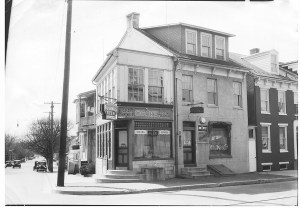
Before my brain could process what I had read, I knew in my bones that I must brew with this yeast a beer that would resemble the Ballantine’s poured at the Bier Garten so many years ago. The Bier Garten, by the way, is actually the Cottage Café, a small neighborhood pub/deli/soda fountain/ cigar and penny candy store that was owned and operated by my grandmother’s parents (and her grandparents before them) in the 1930s, 40s, and 50s in York, Pennsylvania. That its actual name was the Cottage Café came as a complete surprise to me when I learned it a year or two ago, as I’d never heard it referred to as anything but the Bier Garten.
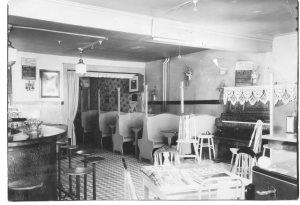
The Bier Garten has come up in stories repeatedly over the years, it’s integral in the family lore, and it’s been an ephemeral presence in my mind for the last four decades. That this place could be so tied to our family history, that so many of my dad’s early childhood memories and those of his siblings and cousins are set in this place, and yet this place had ceased to exist before I was born, has always been a bit haunting to me. And so, my dad’s reply carried a much deeper context for me, far beyond what eleven words could convey. I could touch something connected to the Bier Garten. I could create a real sensory experience akin to tunneling back through time- not to a hypothetical era, but to a real place, a real moment within that era- to my great grandparents’ Cottage Café. And so, brewing this beer, which a moment earlier I had no idea I wanted to do, became instantly and incredibly important to me as I read those eleven words.
Oh, that Ballantine’s . . .
 Counterpoint Brewing and Blending
One thought on “Ballantine’s Ale – Riffing on a Missing Link, Part 1”