THE RIFF
In music, a riff is a repeated musical phrase or theme, and particularly in Jazz, it’s common to vary that phrase or theme in the repetition- which is the act of “riffing.” A Jazz musician might riff on a theme, varying it while remaining close enough to be still recognizable, or even spiraling outward to a point beyond recognition. A musician might riff around a scale, so that they remain within the constraints of a set structure while also improvising.
Similarly, to me the entire act of brewing is a riff. Brewers take inspiration from one another, from what others in the past have done. They take inspiration from beer styles and from specific beers they love; they often work within the framework of a prescribed style guideline and they just as often push the boundaries of the guideline. They blur the lines while retaining a definitive quality that anchors to a specific style, and they also sometimes abandon the anchor entirely. When I brew, I might take inspiration from a certain beer style or even a specific commercial beer without necessarily looking to create an exact replica.
In the case of the Newark-era Ballantine’s Ale, it would be impossible to say whether I had an exact replica because there’s no original example to compare it against, certainly not a fresh example, and anyone who might have consumed the original is either gone or their memory has faded after a half century of the beer’s absence. It’s ok. I’m not looking to make a replica. I’m looking to brew an interpretation, a riff, something that- if I were able to carry it back in time and serve it to my great grandmother Sophie’s patrons at the Cottage Cafe- they might find familiar, might say, “Yes, this reminds me of a Ballantine’s Ale.”
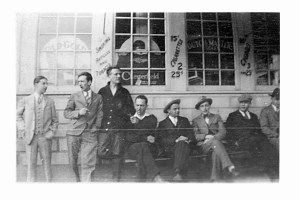
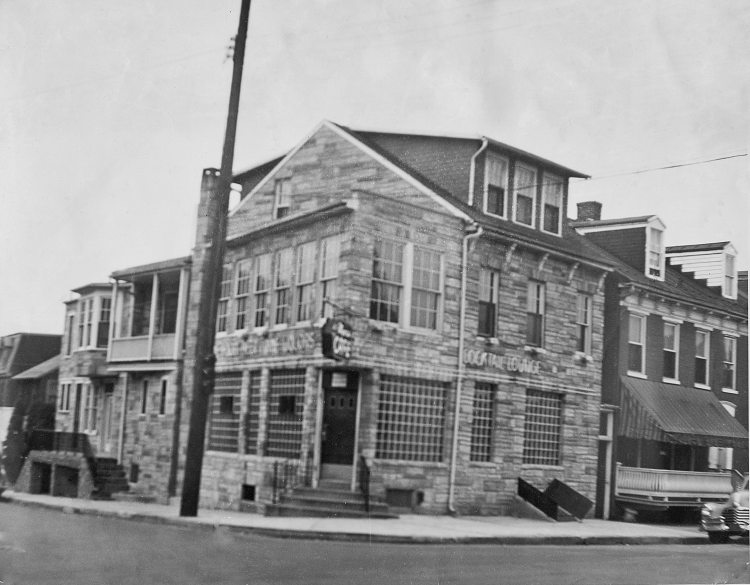
To do that, though, I need a starting point, some idea of the structure around which to riff: starting and finishing gravity, IBU or BU:GU ratio, an idea of grain bill with rough percentages, what hops would have been used, and for what purpose. Ordinarily, a recipe would provide that starting point, but the overwhelming majority of recipes out there seem to miss the mark, most likely based on information from the post-Newark era.
There is one recipe, however, that claims to be based on the original Newark-era iteration. This recipe (in Bill Pierce’s article “Make Mine a Ballantine” from the May/June 2010 issue of BYO) might be the starting point I need. Authored by a prolific home brew writer and accomplished brewer in his own right, the recipe gains credibility from legendary Brewmaster Mitch Steele, who in his iconic IPA: Brewing Techniques, Recipes and the Evolution of INDIA PALE ALE, reprints the Ballantine’s IPA recipe from the same article. It might be the starting point I need, but it includes a dry hop charge of Cascade, so I’m approaching it with caution. Cascade, the poster child for the emerging Craft Beer movement of the last quarter of the Twentieth Century, wasn’t released to market until 1972, so it’s a bit of an anachronism in this recipe. Later iterations of XXX may have included it, but Cascade doesn’t belong in a Newark-era recipe. I’ll need to examine the rest of the ingredients and look to other sources for validation.
The Yeast: One promising detail is that the top yeast recommendation in Pierce’s recipe is ECY10, Old Newark Ale! Even a decade ago, when ECY was relatively new and unknown, still calling themselves a hobby lab and when their home brew pitches were scarcely available even to those in the know, this yeast made it into a published recipe. That lends further credibility to the recipe in my opinion. Most ‘clone’ recipes that can be found online list WLP001 or WY1056, the Chico strain of Sierra Nevada lineage, with a claim that this is proper Ballantine yeast. Legend has it that when Ken Grossman was cobbling together his first brewhouse out of second-hand dairy equipment, he sourced his ale yeast from Ballantine. If true, it must have been a different yeast that was being used during the Fallstaff years. Chico behaves nothing like Old Newark during fermentation, and imparts a more neutral character to the finished beer. I do wonder, though, how is it that frozen cultures of this yeast from Newark survived, but no brewing records survived… It is a head scratcher.
The Hops: We know Cascade doesn’t make the cut, but what about the other hop varieties in the Pierce recipe?
- He lists a bittering charge of Cluster at 60 minutes. This one appears unanimously in the recipes I’ve found, and it does seem very unlikely that Ballantine’s Ale would have been brewed without it. Although its exact lineage is unknown, Cluster is believed to be the first cultivated American hop variety. According to hopslist.com, Cluster accounted for 96% of all the acreage grown in the U.S. by the beginning of the 20th Century and would remain at the top spot until the 1970s. It seems unlikely that any beer during that time would have been brewed without some percentage of Cluster in the mix. Cluster is in.
- The other variety listed is Brewer’s Gold, in two additions in the last 25 minutes of the boil. Brewer’s Gold was developed in England in the early 20th Century and can be traced back to a wild-growing North American hop. It’s known for adding notes of spice and black currant as a late boil addition. Seems to have been a hot item for a while, as acreage and use in the U.S. grew rapidly during the mid-Twentieth Century. Although it’s fallen out of popularity since the 80s, it’s the forebear of later varieties like Nugget and Centennial. Could Brewer’s Gold have been added to the recipe sometime after 1919? Let’s watch this quick TV ad from the 50s:
Yup. Safe to say Brewer’s Gold belongs in this recipe.
- One hop variety that’s not listed in the Pierce recipe but worth noting here is Bullion. It’s widely celebrated that Ballantine’s IPA during the Newark era used a distilled hop oil as a post fermentation dry hop. This was a unique product and process, which is why it was so well known. It’s also what gave the IPA its “pungent” spicy and piney aroma that was so unique at the time. First hand accounts claim that you could smell a Ballantine IPA being poured from several feet away. This special hop oil was distilled from Bullion. It’s less clear whether this same technique was applied to XXX, but both beers were said to have a distinct “woody” character, which is often attributed to the use of oak fermentation tanks. However, the tanks were lined with “brewer’s pitch” which would have prevented contact with the oak. More likely, any woody character would have come from the Bullion. In the absence of the distilled oil, however, the inclusion of Bullion seems redundant in my beer as it’s a close sibling to Brewer’s Gold, imparting nearly identical characteristics to the finished beer. Although I’ll likely skip the Bullion, it’s important enough to be included in the discussion here.
The Malt Bill: The Pierce recipe includes six-row barley as the base malt, with flaked maize and a little Munich and crystal malt. Recipes I’ve seen vary equally between six-row and two-row, but in one of the forum discussions from a decade ago, one user who claims to have spoken with former employees of the Newark plant validates anecdotally that Ballantine at the time would have been malting their own six-row. Six-row does seem to be the likely candidate here since that would have been the majority of the barley planted in the U.S. at the time. Corn frequently accompanies six-row for a number of reasons, and it certainly seems appropriate here. As for the Munich and crystal, I don’t find any independent validation. My only clue would be the XXX designation on the Ale, which no doubt traces back to the British influence on the brewery. XXX is a common moniker for a strong Mild Ale dating back to the first half of the Nineteenth Century in England. While I think the original Ballantine’s Ale would lean more toward a Strong Bitter, the inclusion of these two malts would impart the kind of malty character I’d expect in either of those styles. I’ll probably go with a grain bill made up of six-row, corn, Munich and crystal. I have a nice local source for at least three of those.
The Water: There doesn’t appear to be any information on Ballantine’s water. I assume it would have been municipal Newark water, possibly filtered and treated for mash pH. I will be using my filtered house water, treated for a balanced profile.
The Data Points: Beer historian Ron Pattison in a September 2007 entry on his well-regarded blog “Shut Up about Barclay Perkins” shared some analytical data he’d found. In 1939, Whitbread Brewery analyzed two samples of Ballantine’s XXX Ale. Finishing gravity for both samples landed between 1.014 and 1.015, with OG at 1.056 and ABV at 5.14% and 5.21%. Color on the two samples measured ‘9’ and ’11,’ apparently quite light as Pattison notes two Pilsners on the same page of the Whitbread logs measuring around 9. With the Pilsners as a reference point, I have to assume Whitbread was using the EBC (European Brewing Convention) scale for these color gradings. Converted to SRM the 1939 XXX samples would have come in around 4.5 to 5.5, or yellow/gold. This is the best and most concrete information I have found so far on Newark-era Ballantine’s, and I’m thrilled that it exists. Happily the Pierce recipe checks out, at least on OG. The recipe will be tailored to my system anyway, but it’s good to see an independent source backing up that OG. His color may be a little high at 9 SRM, but I can pull that back by adjusting malt ratios in my recipe.
So, it seems like the Pierce recipe stands as a good baseline for my Ballantine’s XXX riff, with a few adjustments. Stay tuned as I busily scratch out a recipe and gather a few old-timey ingredients . . .


An update on the yeast. Since posting, I’ve been continuing to look into the Ballantine/Chico connection, specifically searching for a quote from the man himself Ken Grossman. What I found was that Grossman originally sourced his yeast from the Siebel Institute, which houses a massive yeast bank dating back to 1882 (the year Siebel began operation). The Siebel-banked strain BRY96 is the parent strain to Chico, and does in fact come from Ballantine. However, there are two Ballantine-derived strains banked at Siebel- the other is BRY97. Here’s the thing: From 1879 to 1918 Ballantine operated two breweries in Newark. In 1879, P Ballantine and Sons purchased a lager brewery (Schalk Brothers Beer Brewery), and this would be where they produced their lager beer until 1918 when that plant closed. BRY96 came from the Schalk plant, while BRY97 was sourced from the original Ballantine plant, where they produced their ales. This explains a few things about Chico, including its relatively neutral character and its ability to ferment at lower temperatures. This does not mean Chico is a lager yeast; it is in fact genetically s. cerevisiae. Schalk was in business long before the first pure lager strain was isolated (what we now know as s. pastorianus, Max Reese 1870), and it’s widely believed that prior to 1908 lagers were probably produced with a mixed culture of saccharomyces or with low fermenting s. cerevisiae. So there you go . . . probably. At least we know how and why Chico can be the Ballantine’s strain, and yet not be the Ballantine’s strain at the same time. I’ve also reached out to Al Buck of East Coast Yeast. Hopefully he’s able to reply back and shed some additional light.
LikeLike
So, about that Part 4? And which yeast? Since it seems that BRY97 AND ECY10 were sourced from Ballantine’s Newark yeasts…
LikeLike
About Part 4 . . . maybe someday. The post is mostly written and waiting only for the beer. I’ve done two iterations, and I think I’ve got the recipe dialed in so that the third iteration will be the one. I haven’t brewed in 18 months, kind of a natural (though not deliberate) hiatus. No idea when I’ll be back at it, but this will be one of the first beers I brew, and then I will post Part 4.
As for the yeast: ECY10 is what I’m using for this recipe, if that’s your question.
Thanks for your interest.
LikeLike